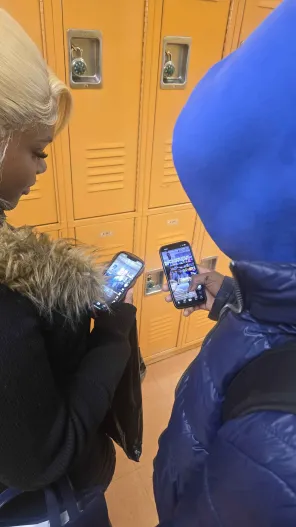
Throughout history, trends have constantly evolved. Some fade away within weeks, while others last for generations. As time passes and new ideas are introduced, the world changes—along with the way people speak, act, and view one another. These shifts have sparked strong opinions, especially among older generations, who often question how modern pop culture influences today’s youth and their development.
Many adults believe that the rise of pop culture has had a powerful effect on the younger generation. Shantel Frances, who works for the CIT program at I.S. 218 Junior High School, describes today’s pop culture as “eccentric, lively, and a bit inappropriate, but fun.” Her perspective highlights the energetic and creative side of modern trends, even while acknowledging their flaws.
Sometimes pop culture encourages young people to follow the crowd in order to be seen as “cool.” Frances believes that “a lot of young people have access to things that they shouldn’t have access to at their age.” However, she also recognizes a positive side, explaining, “On the flip side, it has brought more togetherness with them, with the dances and the phrases and a lot of things they can bond over.” These shared trends allow young people to connect and form relationships through common interests.
Social media plays a major role in today’s pop culture as well. Principal Tanisha Brown explains that, originally, “social media is something you get to catch up with old friends, see how families are doing, and even learn about some new things.” However, she feels that today’s youth are misusing it, which has led to increased issues and conflict. “I am really concerned about our youth today and our future,” she said. While she acknowledges that not all young people misuse social media, she believes “it’s the large amount that makes you concerned.”
In contrast to Frances’ more balanced view, Ms. Brown sees pop culture as largely harmful. She describes it as “influential, but in a negative way, just based off how I’ve viewed it and how I see it.” According to Ms. Brown, these trends often encourage students to “do things they shouldn’t be doing or get them in trouble.” She explains that from working in a school environment, she hears far more negative language than positive messages in students’ everyday conversations.
Ms. Brown also points to music lyrics as a major concern. “Sometimes when I listen to these songs and really pay attention to the lyrics, I’m just like, wow,” she said. “If you go past the music itself, one or two songs may be positive and help someone overcome struggles, but many of the lyrics come across as disrespectful because of the language and messages being used.”
Looking ahead, both adults shared hopes for the future of this generation. Ms. Brown wants young people to “be more reflective on their own growth and their own path in life,” encouraging them to take their futures seriously and ask themselves, “How can I be a better person?”
Meanwhile, Frances hopes to see “a lot more positive influences” among youth. She believes young people should focus on becoming leaders rather than simply watching others live the life they want. “Instead of watching people live the life you want,” she said, “try living that life yourself and documenting it.”
These differing viewpoints highlight the ongoing debate surrounding pop culture’s influence. While it can create connection and self-expression, it can also promote negative behaviors and values. As pop culture continues to evolve, the conversation about how it shapes the next generation remains more important than ever.